Ecology
We can provide advice on all aspects of this discipline - from ecological scoping and protected species survey to impact assessment and mitigation design.
Base line ecological surveys
- Phase 1 habitat survey
- Protected species scoping survey
Protected species surveys
- Badgers
- Bats
- Birds
- Dormouse
- Great-crested newt
- Invertebrates
- Otter
- Reptiles
- Water vole
- White clawed crayfish
Habitat surveys
- Hedgerow surveys
- Invasive plant surveys
- Phase II surveys – using The National Vegetation Classification (NVC)
- Rare plant surveys
- River corridor and habitat survey
Bats
There are eighteen species of bats in England. They and their roosts are protected under UK and European legislation making it illegal to capture, kill, injure or disturb bats, or to damage, disturb or obstruct access to bat roosts.
All bats depend on trees at a number of different levels – some roost in trees, many use woodland for foraging, and trees and tree lines are also used as flight lines. Some of our rarest bats roost in trees.
Many bat species roost in buildings and are vulnerable to changes such as demolition, conversion or refurbishment works (in particular operations to roofs, weatherboarding, soffits, window frames and cavity walls)
Local planning authorities are required to take account of the presence of bats as a material consideration when determining planning applications and it is advisable for developers to investigate the presence of bats at an early stage in the development process. Survey results need to be available to planning officers to enable determination of a planning application.
Bat Surveys
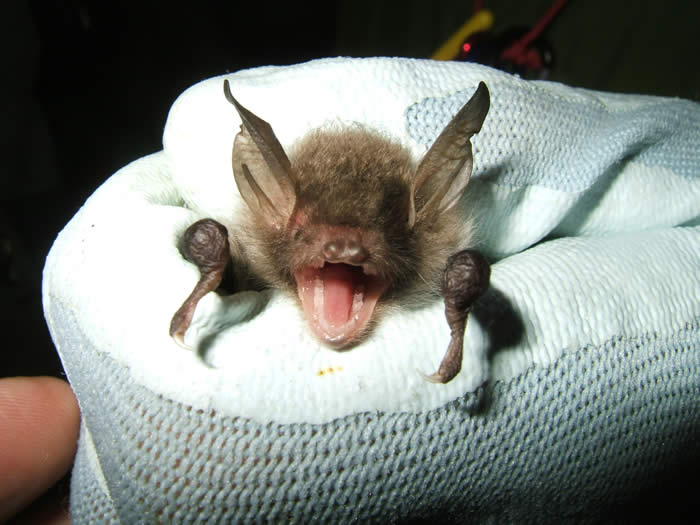
We undertake a range of different bat surveys which can be tailored to suit the client's requirements. Bat surveys are managed by our in house Ecologist who holds bat licence's for England & Scotland and will provide advice as to the scope and timing of the survey. The general types of surveys are
Bat Surveys For Development, Demolition Or Refurbishment
We can provide bat surveys for loft conversions, barn conversions and general refurbishment works including re-roofing, replacement of windows, cavity wall and weatherboarding. We also provide surveys for work affecting agricultural buildings, bridges, ice houses or industrial buildings and all types of demolition works.
Bat Surveys Of Trees
We carry out inspections of trees for bat occupation or use and provide a staged scoping survey which assesses and grades the wildlife conservation value of the trees and the relevant action required. If the tree is assessed as having a high or very high potential to support bats we can undertake a detailed aerial inspection using our in house qualified climbers and / or mobile elevated work platform (MEWP) to examine the tree with a video endoscope. Additional evening (emergence) and dawn (entry) surveys using bat detectors may be appropriate if bat usage is found.
We can also undertake a full structural evaluation of the tree and provide a specification for tree works or felling. If necessary a method statement will be produced and application made for a European Protected Species licence to undertake the necessary works.
Extended Phase 1 Habitat Surveys
Usually the first stage in assessing the ecological significance of a potential development site. Target notes will identify any potentially significant areas which may require detailed ecological investigation.
National Vegetation Classification (NVC) Surveys
This system of classifying plant communities can lead on from an extended phase 1 habitat survey if potentially sensitive communities are identified. Additionally it can form the basis of a detailed woodland management plan.